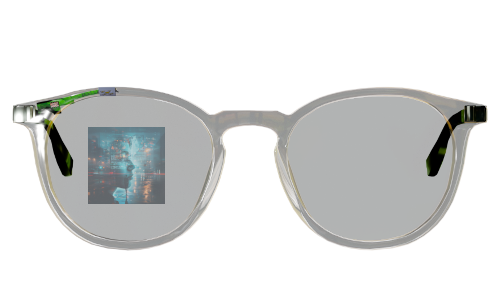
Why a New Projection System for Augmented Reality?
This document outlines the design of a novel system for creating augmented reality (AR) images in both 2D and 3D. The system is designed to address the limitations of current AR technology, focusing on reducing power consumption and improving user experience.
1. The Need for an Alternative Projection System
Current AR displays, often based on microdisplays integrated into glasses, suffer from high power consumption, limiting battery life. They also require significant onboard processing power, leading to increased heat and size. This system proposes a separate projection unit to address these issues.
- High Power Consumption: Current AR glasses rely on microdisplays that consume a significant amount of power, leading to short battery life (typically 2-3 hours).
- Onboard Processing Power: The need for significant processing power to render AR images contributes to increased heat generation and makes the glasses bulky and uncomfortable.
- Limitations of Current Technology: Current AR technology struggles to provide a comfortable and long-lasting user experience due to these limitations.
2. A Passive Optical System for Efficient Image Reconstruction
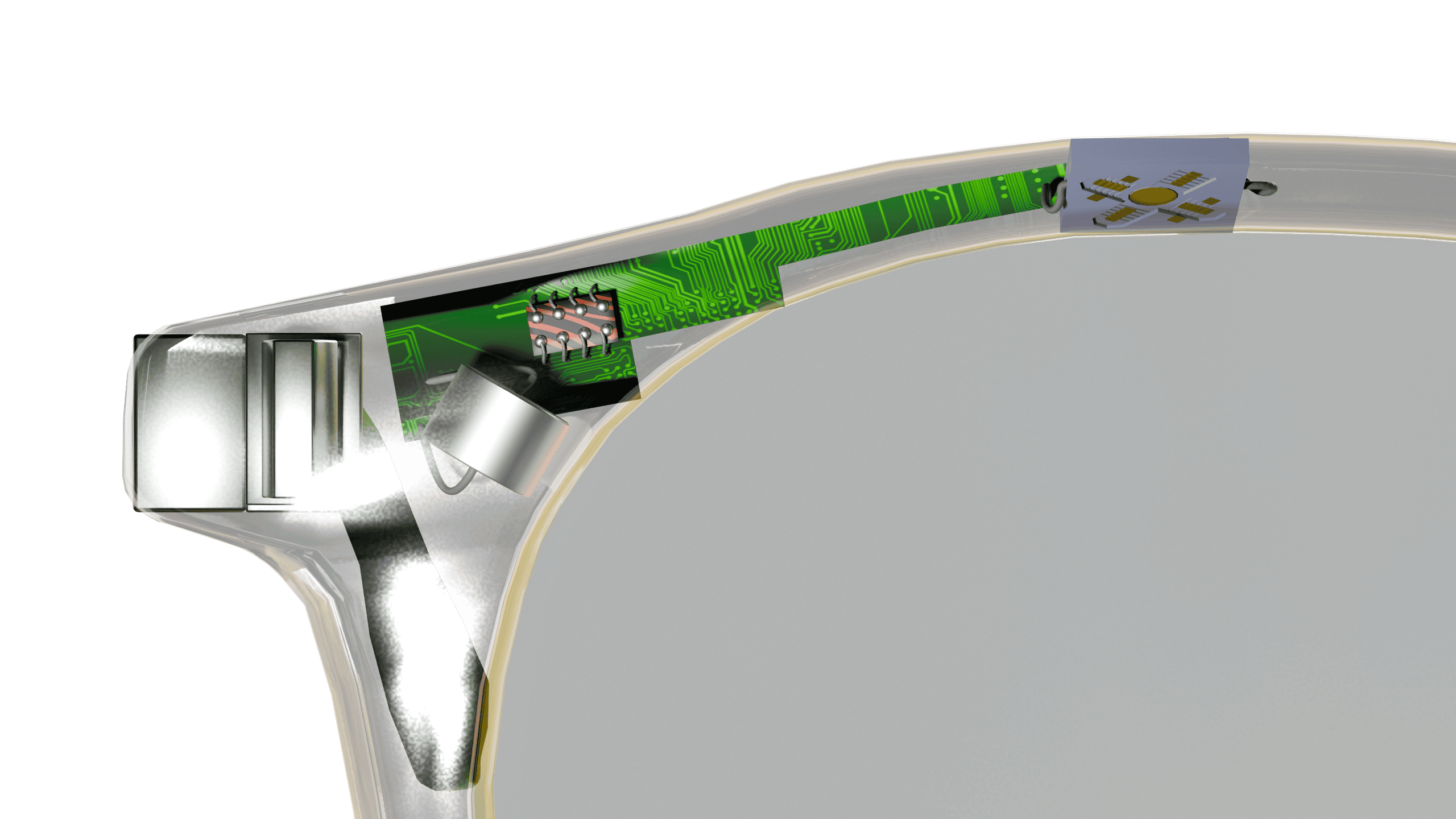
The optical system, integrated into the AR glasses, utilizes a micro-mirror to reflect the projected light. This mirror scans the image horizontally and vertically, reconstructing it on the lens based on information from the projector. This passive approach significantly reduces the processing load on the glasses.
- Scanning with Micro-Mirror: A micro-mirror moves in two dimensions to scan the projected image, line by line, reconstructing it on the lens.
- Passive Decoding: The glasses passively decode the information from the projector, reducing the need for onboard processing.
- Efficient Image Reconstruction: This method allows for efficient image reconstruction with minimal power consumption.
3. Advantages and Applications of the New System
This system offers several advantages: reduced power consumption, extended battery life, and a shared AR experience. It allows multiple users to view the same large-scale image, regardless of their distance from the projector. This opens up new possibilities for entertainment, collaboration, and education, and allows a single viewer to see multiple sources without resolution limits.
- Reduced Power Consumption: By moving the processing and projection to an external unit, the glasses consume significantly less power, leading to extended battery life (potentially months or years).
- Shared AR Experience: Multiple users can view the same large-scale image, regardless of their distance from the projector, enabling shared AR experiences.
- New Possibilities: This system opens up new possibilities for entertainment, collaboration, and education, allowing for more immersive and interactive AR experiences.
- Multiple Sources: A single viewer can view multiple sources without resolution limits.
- Solving Current Problems: This system solves the problem of microdisplays mounted on augmented reality glasses that are energy-intensive, the battery often does not exceed 2 or 3 hours, it is also necessary to have a computing power that increases the temperature and thickness; in this way, the computing power and projection will be moved outside the glasses, and the glasses with the optical system and the MEMS will only have to passively decode the information coming from the outside, with a battery life potentially of months or years.