MEMS
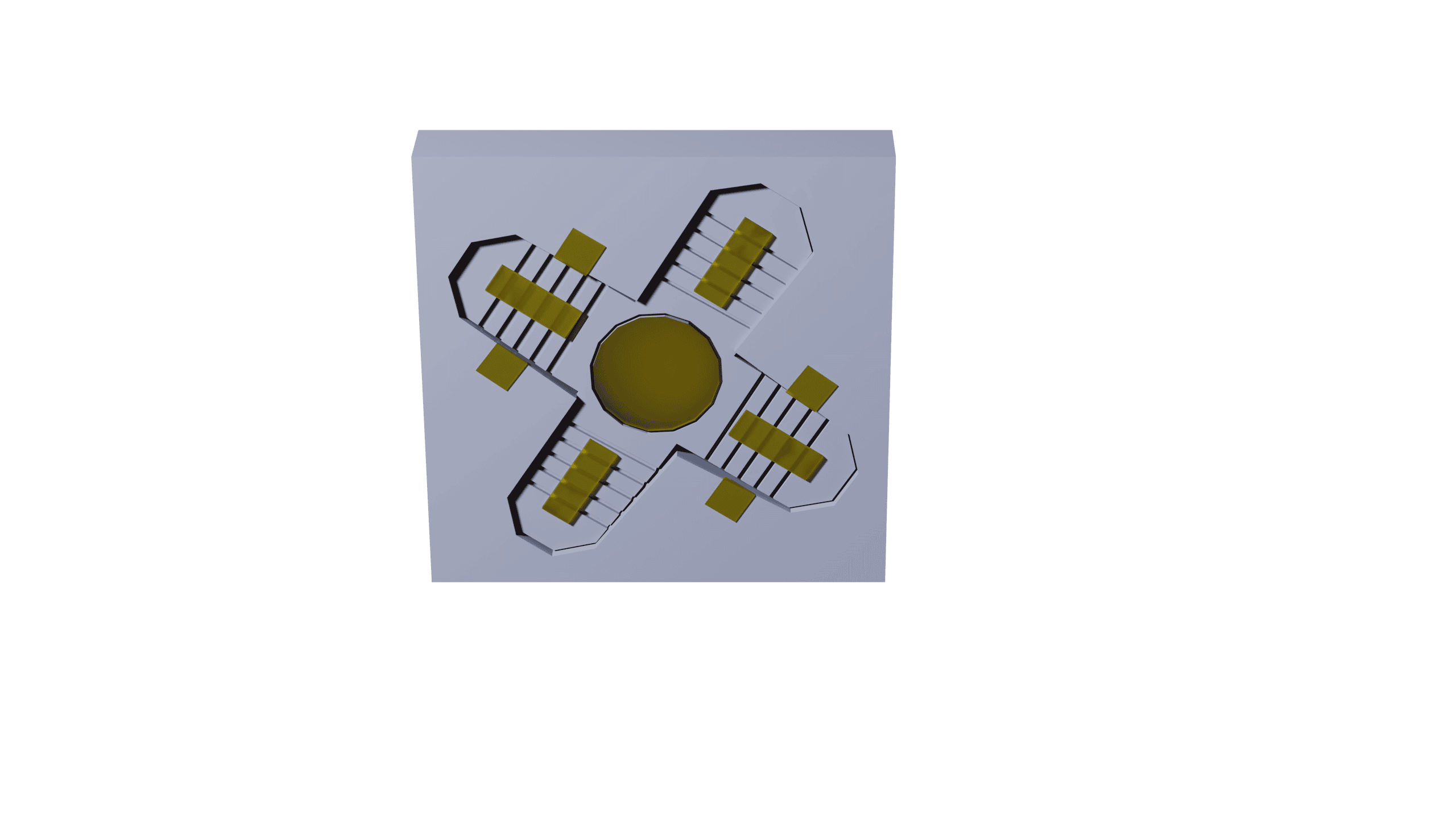
MEMS Micro-Mirror for Holo Lux: An In-Depth Look
The Holo Lux augmented reality system, as described in the patent “LED Projection System with Passive MEMS Display,” utilizes a MEMS (Micro-Electro-Mechanical System) micro-mirror integrated into the glasses for image display. This crucial component, while operating on similar principles to other MEMS scanners, has specific characteristics optimized for the Holo Lux architecture.
Distinctive Features for Holo Lux:
-
Type and Movement: The MEMS used in Holo Lux is a rotating micro-mirror designed for two-dimensional movement. As specified in the patent, the micro-mirror rotates, forming horizontal lines and proceeding vertically to create the image. This raster scanning approach is fundamental for image reconstruction on the glasses lens.
-
Passive Operation: A key aspect of the Holo Lux system is that the MEMS operates in passive mode. This means that the micro-mirror reflects light from an external source (the LED projection system) without emitting its own light. This design choice is central to reducing energy consumption and heat generation in the glasses, as highlighted in the patent.
-
Specific Optical Requirements: The patent emphasizes an important requirement: “the focused point must be smaller than the diameter of the micro-mirror.” This condition is essential to ensure that the projected light is effectively reflected by the MEMS towards the reflective surface, optimizing the brightness and quality of the perceived image.
Comparison with Generic Examples of MEMS Scanners:
| Type | Mode | Parameter ranges of different designs | Parameters of selected sample designs | ||||
|---|---|---|---|---|---|---|---|
| Tilting mirror 1D | quasi-static | 1 … 6 x 8 mm² | up to 10.5° | up to 2.4 kHz | 2 x 3 mm² | 9.5° | 550 Hz |
| resonant | 0.5 … 7 mm² | up to 25° | up to 100 kHz | 3 x 3 mm² | 9.5° | 6.0 kHz | |
| Tilting mirror 2D | quasi-static | up to 5 x 7 mm² | up to 10° | up to 1.2 kHz | 2.5 x 1.8 mm² | 10° | 180 Hz |
| resonant | up to 3 x 4 mm² | up to 28° | up to 25 kHz | 3.3 x 3.5 mm² | 11° | 150 Hz | |
| resonant | up to 3 x 4 mm² | up to 28° / up to 21° | up to 25 kHz / up to 42 kHz | 3.3 x 3.5 mm² | 11° | 110 Hz | |
| Translational | resonant | D = 5 mm | +/- 500 µm | D = 5 mm | +/- 500 µm | 500 Hz | |
| quasi-static | D = 5 mm | stroke 120 µm | D = 5 mm | stroke 120 µm | 440 Hz |
data from Fraunhofer IPMS: Fraunhofer IPMS
Note:
- (1) Typical mirror geometry: round/elliptical, rectangular for selected designs
- (2) Amplitude: torsional scanners – Mechanical scan amplitude (mechanical scan range = 2x amplitude, optical field of view = 4x amplitude), translational mirrors – oscillation amplitude (total mechanical displacement = 2x amplitude, optical pathlength modulation = 4x amplitude)
- (3) The maximum repetition rate of linearized trajectories of non-resonant / quasi-static scanners is about one fifth of this value.
The table provides a general overview of the capabilities of MEMS scanners. However, it is important to distinguish the specific characteristics implemented in Holo Lux:
-
Controlled Rotation: While the table mentions mechanical tilt amplitudes, the Holo Lux patent implies precise control of the micro-mirror’s rotation to scan the image in a linear and controlled manner.
-
Dimensions Optimized for Application: Although the table indicates typical dimensions of MEMS mirrors, the specific dimensions of the MEMS in Holo Lux are optimized for integration into glasses and to meet the field of view and resolution requirements of the system.
-
Operating Mode: The table distinguishes between “quasi-static” and “resonant” modes. The Holo Lux patent, describing a line-by-line scan, suggests precise control of the MEMS movement, potentially oriented towards a quasi-static mode or a combination of the two for accurate scan control.
Implications for the Holo Lux System:
The choice and configuration of the MEMS micro-mirror are crucial for the operation and performance of the Holo Lux system:
-
Image Reconstruction: The precise movement of the micro-mirror, synchronized with the modulation of the LED light, is what allows the image to be reconstructed on the glasses lens.
-
Efficiency and Design: The passive operation of the MEMS contributes to the energy efficiency of the system, allowing most of the processing and projection power to be moved outside the glasses, resulting in a lighter and more compact design.
In conclusion, the MEMS micro-mirror represents a key technological component in the architecture of Holo Lux. Its ability to reflect light in a controlled and passive manner, as described in the patent, is fundamental to achieving the goals of low energy consumption and compact design, while offering an innovative augmented reality experience.